

Since the 1980s we have developed and manufactured machinery and complete lines specifically for the treatment of sesame, evolving each stage of the process to meet the needs of an increasingly demanding industry.
We design lines that integrate solutions for cleaning, washing, peeling, drying and roasting, configured according to the product, production capacity and the needs of each plant.
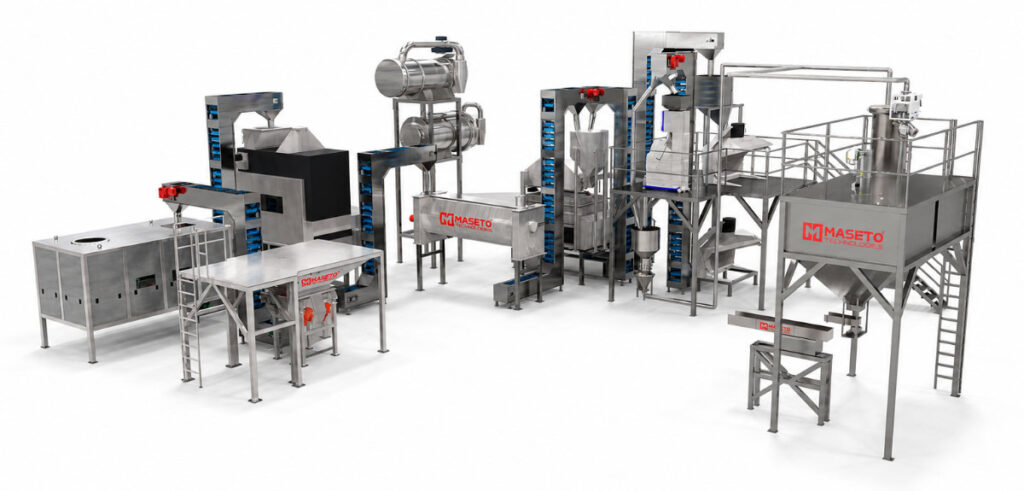
The industrial sesame cleaning line is designed to efficiently remove impurities such as dust, stones, metal particles, plant debris, and unsuitable seeds. The process combines various stages of separation, aspiration, screening, and classification, guaranteeing a clean, uniform product suitable for subsequent roasting, packaging, or sale.
The system is characterized by its continuous operation, robust construction, and ease of cleaning and maintenance. Furthermore, it can be adapted to different production capacities and purity levels, contributing to improved final product quality, reduced losses, and compliance with food hygiene and safety requirements.
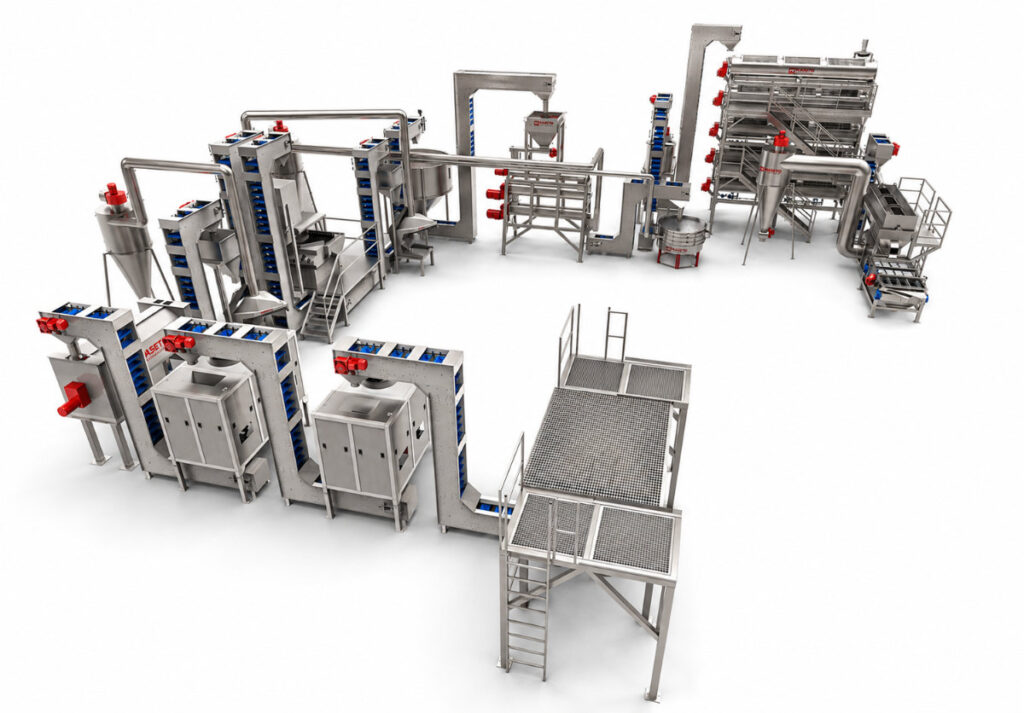
The industrial sesame peeling and roasting line is designed to process seeds continuously, efficiently, and uniformly, guaranteeing a high-quality final product. The system integrates the stages of cleaning, soaking, peeling, hulling, washing, drying, and roasting, reducing manual intervention and optimizing water and energy consumption.
Thanks to precise control of temperature, processing time, and production speed, the line produces seeds with uniform peeling, consistent color, crisp texture, and intense aroma, while preserving their nutritional properties. Its stainless steel construction facilitates cleaning, improves hygiene, and meets food industry requirements.
The system can be configured for different production capacities and adapted to the needs of manufacturers of tahini, bakery products, confectionery, oils, seasonings, and other sesame-based products. Its modular design, automated operation, and low maintenance provide a reliable and cost-effective solution for industrial sesame processing.
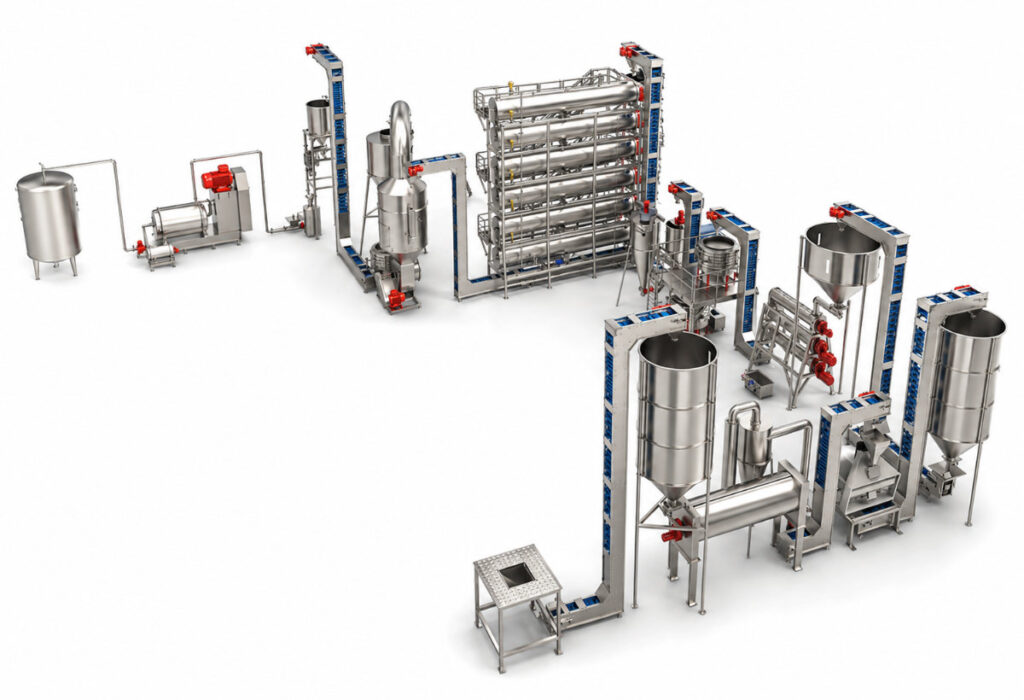
The sesame tahini line integrates the stages of cleaning, peeling, toasting, and grinding to obtain a homogeneous, aromatic, and high-quality paste. The process begins with the reception and cleaning of the seeds, removing dust, stones, metal particles, and other foreign matter through screening, aspiration, and electronic separation systems.
Next, the seeds undergo hulling, typically through hydration and mechanical friction, followed by the removal of the hulls and the draining or drying of the product. This process improves the texture, color, and smoothness of the final tahini. Subsequently, the hulled sesame seeds are placed in a time- and temperature-controlled roaster, where they develop their characteristic aroma and flavor without burning.
After rapid cooling, the roasted seeds are ground in one or more stages to obtain a fine, uniform paste. Finally, the tahini can be homogenized, deaerated, and cooled before storage or packaging. The entire line is designed for easy cleaning, to ensure a continuous flow of product, and to maintain hygienic conditions throughout production.
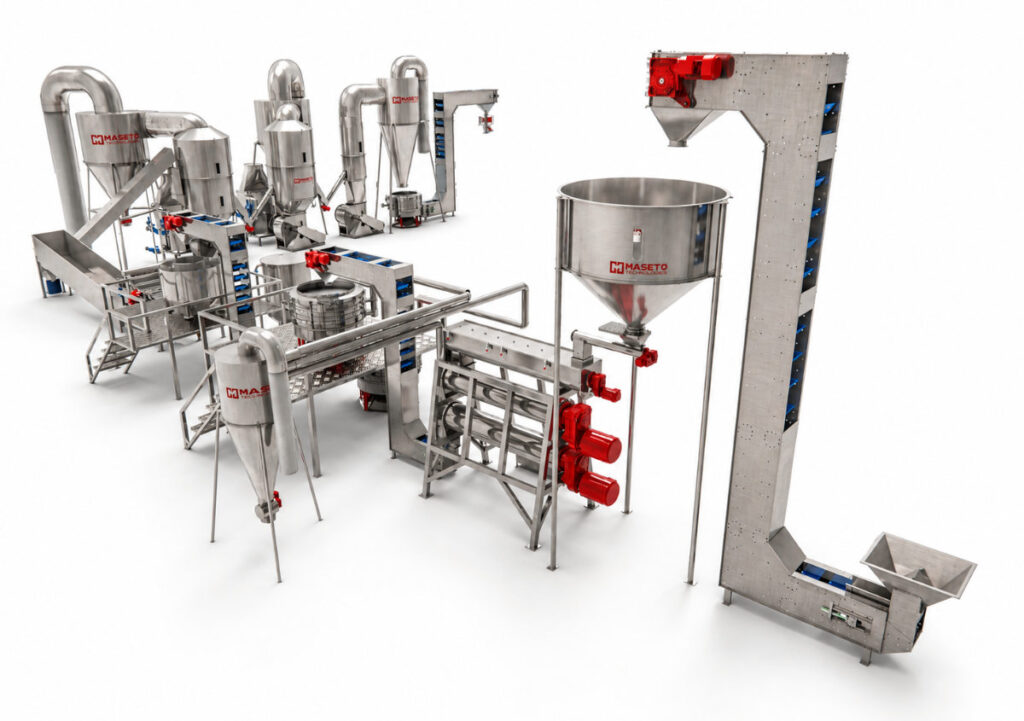
Sesame is received in sacks or in bulk. Samples are taken to verify moisture, purity, odor, color, chemical residues, mycotoxins, and microbiological criteria. Accepted raw material is stored in silos or hoppers protected from moisture. A vibrating screen separates coarse and fine materials, such as stems, leaves, clods, dust, and seeds of different sizes. Vacuum cleaners are used to remove light particles, magnets or magnetic detectors for ferrous materials, and destoners for stones and mineral particles.
When high quality is required, an optical sorter removes dark, blemished, or other types of seeds. To produce white hulled sesame, the seeds are conditioned with water and rubbed to remove the hull.
The hulls are then separated, the grain is washed, and it is centrifuged or drained. The moist product is dried with hot air under controlled conditions until it reaches a moisture level that allows for preservation without affecting the color, flavor, or ability to adhere to bakery products.
Adding {{itemName}} to cart
Added {{itemName}} to cart

