
Understanding how to reduce losses in nut processing is directly linked to the profitability of an industrial plant. A processing line may maintain its daily output while still losing product because of poor sizing, incorrect settings or a lack of coordination between different stages.
In a poorly calibrated line, losses can range from 3% to 8% of the product during each production cycle. At industrial scale, this is no longer a minor figure: it represents wasted raw material, out-of-specification product and a cost that is repeated day after day.
For this reason, plant performance should not be measured solely by the nominal capacity of its machinery. It is also necessary to assess how much usable product actually reaches the end of the process and where the main losses are occurring throughout the line.
Where losses occur in nut processing
Losses do not always appear in the form of a breakdown or production stoppage. In many cases, they occur while the plant continues to operate apparently normally.
Unnecessary breakage, surface damage, rejection of acceptable product, out-of-specification batches or mismatched capacities between machines can gradually reduce overall performance.
The difficulty is that these deviations are often spread across several stages. Looking for a single machine responsible for the problem therefore rarely provides a complete picture.
Performance depends on the entire production flow
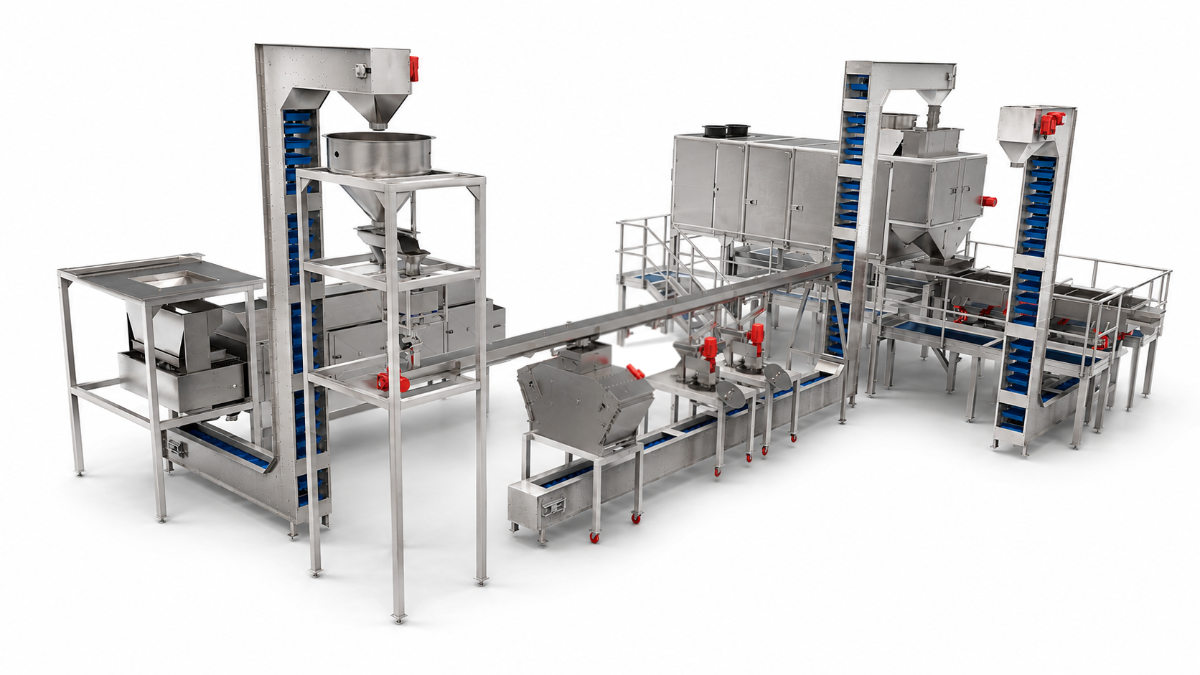
A processing line works as a system. Each stage affects the next, and an incorrect adjustment at the beginning of the process can have consequences several stages later.
Irregular feeding can affect sizing. Poor sizing can compromise peeling. Uneven roasting can create out-of-specification product. And an incorrectly configured optical sorter can reject acceptable product or allow unsuitable product to reach packaging.
Reducing losses therefore requires analysing the entire process and understanding how the different operations interact with one another.
Sizing: a key stage for preventing downstream losses
Product size has a direct influence on the performance of many downstream machines.
When the same configuration is used for products with significantly different sizes, it becomes much more difficult to apply precise parameters and maintain consistent treatment.
Effective sizing allows subsequent stages to be adjusted more accurately to the actual product entering the line and helps reduce damage, reprocessing and loss of yield.
Peeling and blanching: adjusting pressure to product size
In processes such as peeling or blanching, pressure that is not correctly adjusted to the size of the product can affect both yield and surface quality.
An overly aggressive setting can increase product damage, while insufficient pressure may result in part of the production having to be reprocessed.
Optimisation means finding the right balance between capacity, final quality and maximum use of the raw material.
Process consistency also determines profitability
Processing faster does not necessarily mean processing better. In an industrial installation, consistency of results is just as important as capacity.
When one stage produces irregular results, the likelihood of generating rejects, reprocessing or product that fails to meet the required specifications increases.
Roasting: heat distribution must be uniform
During roasting, uneven heat distribution can create differences within the same batch.
While part of the product reaches the required parameters correctly, another part may fall outside specification. At high production volumes, this lack of uniformity becomes a recurring source of loss.
For this reason, evaluating a roasting system involves more than simply looking at its capacity in kilograms per hour. It is also necessary to assess how evenly heat is distributed and the level of consistency achieved throughout the process.
Optical sorting: rejecting more does not mean sorting better
Optical sorting is another stage where poor configuration can reduce product yield.
If the system is set too strictly, it may reject perfectly acceptable product. If it is too permissive, it may allow product through that should not reach the packaging stage.
Improving yield requires adjusting sorting criteria to the actual specifications of the product and the customer, avoiding unnecessary rejection without compromising final quality.
How to reduce losses in nut processing
Optimising a processing plant should involve a combined assessment of variables such as:
- product characteristics, varieties and sizes;
- feed consistency at each stage;
actual machine capacity and potential bottlenecks;- operating parameters for each piece of equipment;
- percentage of damaged or rejected product;
- need for reprocessing;
- continuity of flow between processes;
- quality and consistency of the final product;
- stoppages and unproductive time.
Analysing these factors makes it possible to determine whether losses are caused by a specific setting, an individual machine or the way the overall line has been designed and integrated.
This distinction is important: replacing one piece of equipment will not necessarily solve the problem if the real cause lies elsewhere in the process.
Initial purchase price does not determine the true cost of machinery
Investment in industrial machinery should be assessed over a period of years, not only at the moment of purchase.
The true cost of a solution depends on what it produces throughout its service life, but also on the losses it helps prevent.
In a plant processing large volumes, even small percentage improvements in product yield can build up to a significant financial impact over time.
For this reason, comparing machinery solely on initial purchase price gives an incomplete picture. The decision should also take into account performance, reliability, maintenance, product quality, waste levels, production capacity and how well the equipment integrates with the rest of the installation.
Optimising a nut processing plant requires analysing the entire process
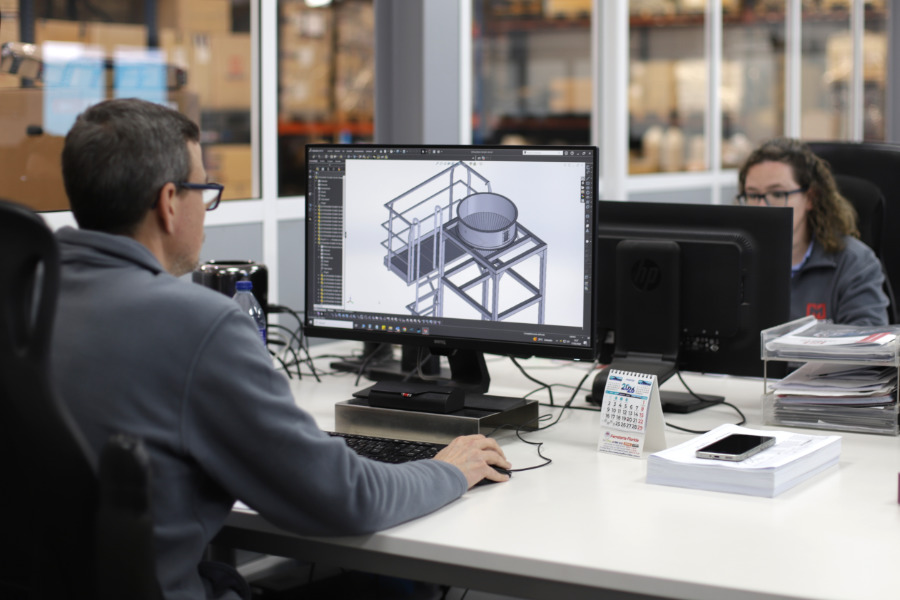
At Maseto Technologies, the development of an industrial solution begins with an analysis of the product, production requirements and the interaction between the different stages of the plant.
The company designs and manufactures machinery for processes including shelling, peeling and blanching, screening, sorting, cutting, chopping, drying, roasting, cooling, conveying and storage.
The objective is not simply for each machine to perform its individual function correctly, but for all of them to work together in a coordinated way to improve the overall performance of the installation.
This approach makes it possible to assess the line from a broader perspective: capacity, final quality, product yield, ease of maintenance, versatility and future production requirements.
How much product is your line really losing?
A plant may be processing thousands of kilograms every day and still have considerable room for improvement.
Identifying that potential requires examining what happens to the product from the moment it enters the installation until the process is complete, determining where losses occur and identifying which adjustments could improve performance.
At Maseto, we analyse production requirements, product characteristics and the behaviour of the entire process flow to develop solutions focused on reducing losses and maximising the use of raw materials.
The profitability of an industrial processing line should not be measured solely by how much it costs to purchase, but by how much it enables you to produce, retain and avoid losing throughout its entire service life.