
Industrial almond processing is far more complex than it may appear at first glance. It is not simply a matter of feeding product into a line and applying the same parameters every time.
Each almond arrives with its own characteristics. Variety, size, moisture content and the condition of the raw material all influence how it behaves during shelling, blanching, sorting, cutting and any subsequent processing stage.
This is one of the keys to industrial performance: the line must adapt to the product, rather than forcing the product to adapt to the line.
Because processing more does not necessarily mean processing better. If kernels are damaged, surface quality is lost, breakage increases or commercial quality declines during processing, the plant may be losing value even while maintaining a high production capacity.
Almonds are not a uniform raw material
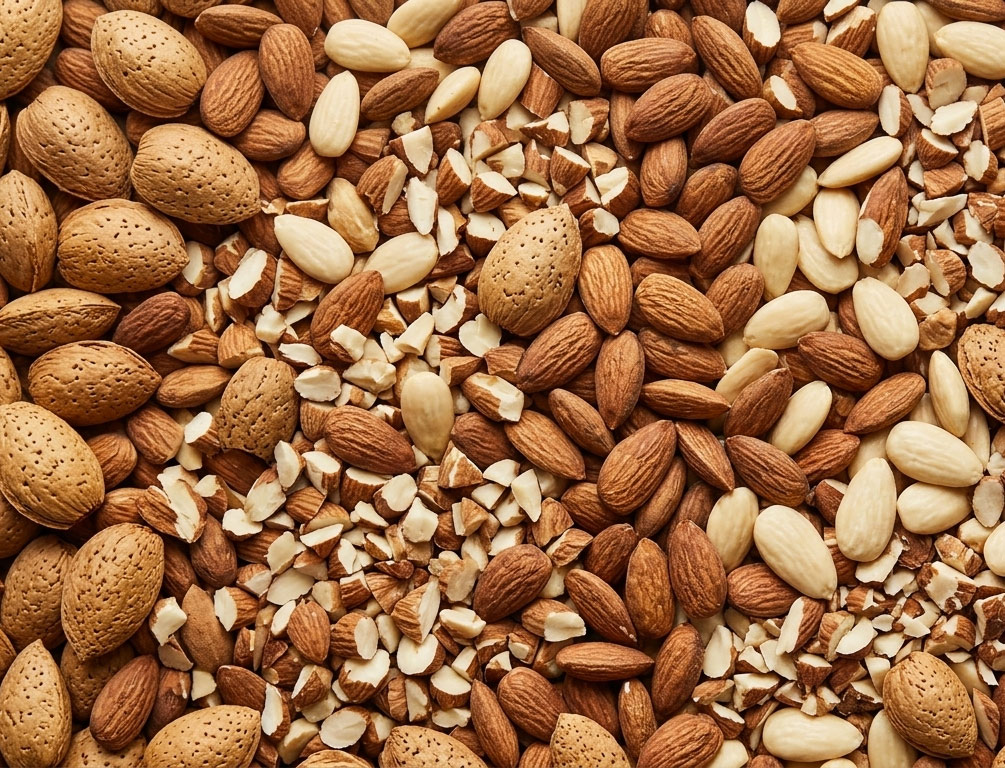
Referring to “almonds” as though they were a completely homogeneous product can lead to significant design errors.
A single processing plant may receive different varieties, sizes and moisture levels. Each of them can react differently to pressure, friction, temperature or the separation systems used throughout the process.
This variability makes it essential to work with lines that offer a high degree of adaptability.
Maseto develops specific solutions for shelling, peeling, cutting, chopping, sorting, drying, roasting and other stages where preserving the product surface and achieving a consistent result are key objectives.
Moisture changes how almonds behave
Moisture is one of the factors that most strongly influences product behaviour during processing.
An almond with a particular moisture content will not respond in the same way as one that is drier or contains more moisture. This can affect product resistance, how easily the skin is removed, its behaviour during cutting and the consistency of the final result.
For this reason, the design of an industrial line should not be based solely on a target capacity measured in kilograms per hour.
It is also necessary to understand the type of product that will pass through the installation and how its characteristics may change throughout the season.
The same setting does not work for every almond
One of the risks of using an overly rigid configuration is applying the same parameters to products that behave differently.
In blanching, for example, the objective is not simply to remove the skin from the kernel. It is also important to preserve the almond surface and maintain the quality of the finished product.
Pressure, processing time and the way the product moves through the installation must all be adjusted to the actual characteristics of the raw material.
Each variety may require a different configuration
Almond varieties do not always share the same physical characteristics.
Some may be more resistant. Others may differ in shape, size, texture or behaviour during specific processing operations.
These differences have a direct impact on performance.
A line designed without taking this variability into account may perform well with one variety and deliver poorer results when the product changes.
For this reason, an industrial installation intended to process different types of almond should offer enough versatility to adjust its parameters without compromising production continuity or quality.
Preserving the product also means preserving its value
In almond processing, there is an important difference between simply processing the product and preserving its value throughout the process.
The objective should not merely be to move almonds through every production stage.
They should reach the end of the line while retaining the characteristics that determine their commercial value.
An almond that is damaged, excessively broken or has a deteriorated surface may still be a processed product, but it may no longer have the same market value.
That difference has a direct economic impact.
Performance is not measured only in kilograms per hour
Production capacity is an important metric, but it is not enough on its own.
A plant may increase hourly output while simultaneously reducing raw material yield.
That is why, when evaluating the performance of an almond processing line, several indicators should be considered together:
- production capacity;
- percentage of intact product;
- breakage levels;
- consistency of the final result;
- need for reprocessing;
- product rejection rates;
- surface quality;
- ease of adjustment between different varieties.
True efficiency is achieved when capacity and quality improve in the same direction.
Line design directly affects plant profitability
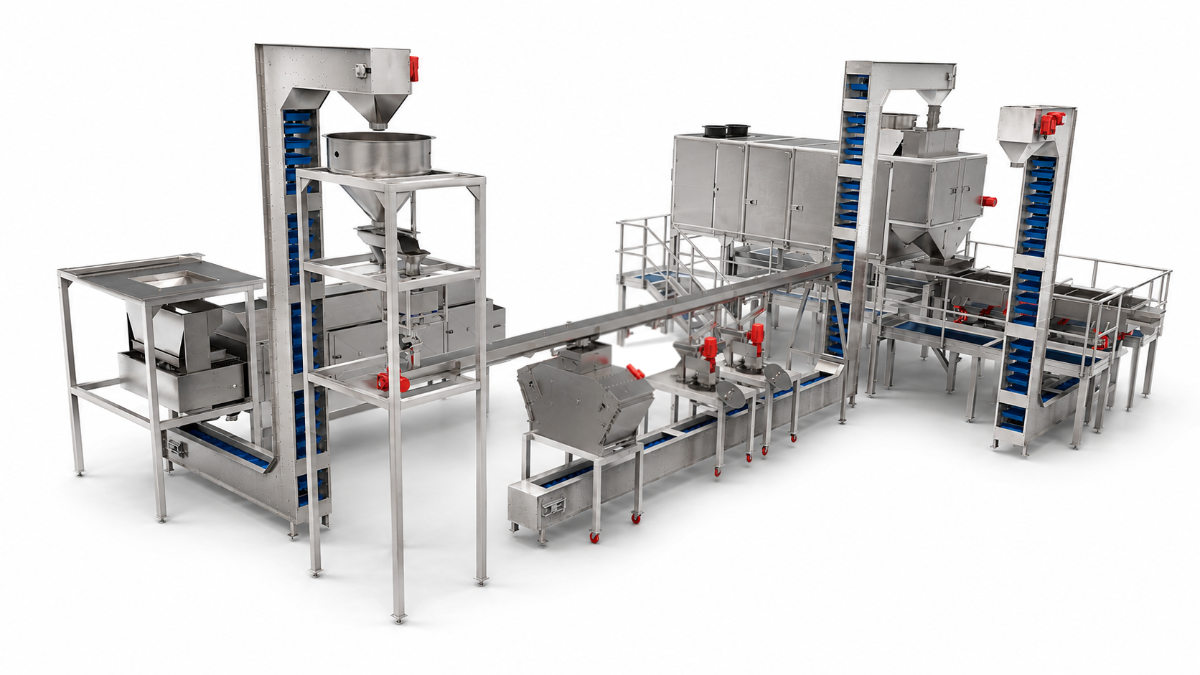
An industrial processing line is not simply a sequence of machines.
Each stage changes the conditions in which the product reaches the next.
Poor sizing can make shelling more difficult. Shelling that is too aggressive can increase breakage. Inadequate product preparation can affect blanching. And irregular feeding can reduce the stability of subsequent processes.
These relationships need to be considered from the very beginning of the design process.
Maseto works with a customised manufacturing approach and develops complete nut and sesame processing solutions aimed at optimising product handling and maximising the efficiency of each installation.
Industrial almond processing begins before the machinery is switched on
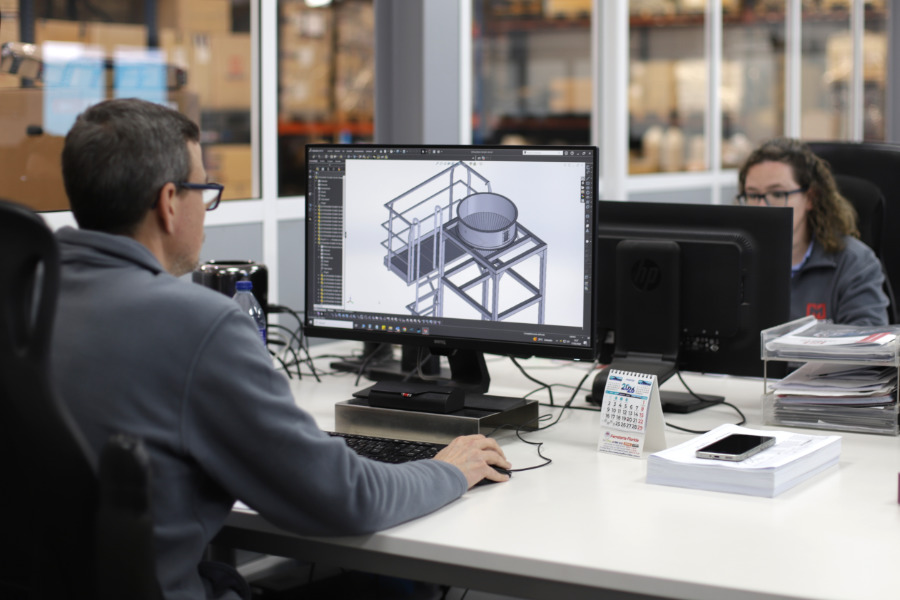
One of the most important decisions is made before production even begins: how the process itself has been designed.
A properly planned line should take into account, at a minimum:
- expected almond varieties;
- size ranges;
- possible variations in moisture;
- required capacity;
- desired final product;
- necessary intermediate processes;
- available space;
- future production requirements.
The more information analysed before the line is manufactured and installed, the greater the likelihood of achieving a stable and profitable process.
From shelling to the final product: every detail matters
Industrial almond processing can involve multiple stages depending on the final product required.
Maseto develops solutions for shelling, cleaning, peeling and blanching, sorting, screening, cutting, chopping, drying, roasting, conveying and storage, among other processes.
Each of these stages has a specific purpose, but none should be analysed in isolation.
The real value lies in how they work together.
A good result from one machine loses its value if the next stage is not prepared to receive the product under the right conditions.
Designing for real almonds, not theoretical ones
Raw materials change.
Harvests change, available varieties change, growing conditions change and so do the physical characteristics of the product arriving at the plant.
For this reason, an industrial line that is too rigid can become a limitation over time.
The objective should be to design installations capable of handling the real variability of the product and allowing adjustments when conditions change.
This approach is particularly important for high-volume industrial processors, precisely the type of customer Maseto’s solutions are designed for.
More than six decades of experience in nut processing
Maseto Technologies has been developing machinery and solutions for nut processing for decades.
The company bases its work on continuous research, ongoing improvements to systems and components, and the manufacture of solutions adapted to each customer’s specific requirements.
In almond processing, this experience makes it possible to approach line design from a perspective that goes beyond the individual machine.
The objective is to understand how the product behaves, how it may vary and which configuration can provide the best possible balance between capacity, quality and profitability.
Product quality begins with process design
A high-quality almond can lose value during a poorly designed process.
But a properly designed line can help preserve its qualities, reduce damage and make better use of every kilogram of raw material.
That is why, when planning a new installation, the question should not simply be which machines the plant needs.
It should also ask: what does the almond need in order to retain its value throughout the entire process?
At Maseto, we analyse product characteristics, capacity requirements and the specific conditions of each project to develop processing lines adapted to real production environments.
Because in industrial almond processing, final product quality does not begin with the last machine in the line. It begins much earlier: with the design of every stage of the process.